
Is Forex a scam or a real opportunity to make money? The whole truth
Many investors ask an important question: Is Forex a scam or a real opportunity to make money?
The honest answer is that the Forex market itself is a real and legitimate financial market, but at the same time it is high-risk and rife with fraudulent practices that cause the vast majority of individual traders to lose their money.
What is the Forex market?
And why is it not a scam in essence? The Forex market (foreign exchange market) is the largest financial market in the world, where trillions of dollars are traded daily between central banks, financial institutions, and large companies, with the aim of facilitating international trade and global investment.
Therefore, Forex is not a scam by nature, but a real market that is subject to regulatory oversight in many countries.
Why do most Forex traders lose money?
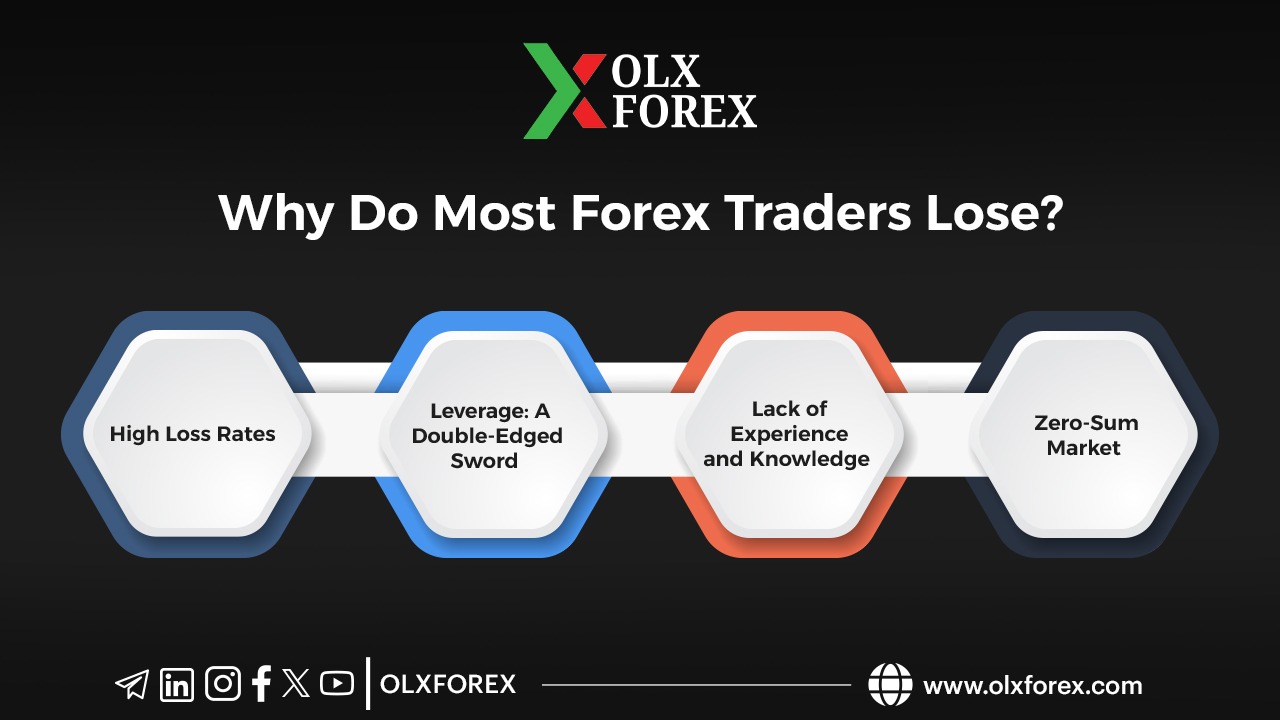
1- High loss rates
Realistic statistics, including data from the US Commodity Futures Trading Commission (CFTC), indicate that around 67% of individual traders lose money on a regular basis.
This high percentage explains why the idea that Forex is a scam is so widespread.
2- Leverage is a double-edged sword
Leverage enables traders to open large positions with little capital, but it also multiplies losses as quickly as it multiplies profits, making it one of the most dangerous causes of account losses.
3- Lack of experience and knowledge
Entering a complex market such as Forex without understanding technical or fundamental analysis, and without a clear risk management plan, often leads to rapid losses.
4- Zero-sum market
The Forex market is classified as a zero-sum market; that is, one party's profit means another party's loss, and the losing party is often the individual trader facing huge financial institutions with vast experience and resources.
How can you distinguish between real Forex and fraudulent scams?
Common signs of fraud in Forex
- Promises of guaranteed or unrealistic profits, such as "earn $1,000 a day" or 100% success rates.
- Secret strategies with no documented trading history.
- Unregulated brokers or brokers without known regulatory licenses.
- Only accepting deposits via cryptocurrencies or untraceable payment methods.
- Managed accounts or investment programs promising fixed returns such as 10% per month.
-Unwanted communication via social media with psychological pressure to rush your decision, preventing you from researching and thinking.
How can you trade Forex more safely?
Or, more precisely, what are the basic steps to protect yourself in this market?
- Learn before you invest: Understand the basics of Forex, analysis, and risk management before risking real money.
- Trade on a demo account: Practice for a sufficient period of time until you prove your ability to achieve stable results.
- Choose a regulated broker: Make sure the broker is licensed by strong regulatory bodies such as FCA, ASIC, or CySEC.
- Start with a small capital: Only use money that you can afford to lose.
- Strict risk management: Don't risk more than 1-2% of your capital on a single trade, and always use stop-loss orders.
- Avoid emotion and greed: Emotional trading is the fastest way to lose your account.
Ultimately, Forex is not a scam in the traditional sense, but it is not an easy or guaranteed path to quick riches.
It is a real, high-risk market, rife with scams that prey on the ambitions of beginners, while success requires serious education, strong self-discipline, and careful risk management.
If you are thinking of entering this field, start with the most important step, which is learning, then free training on a demo account, before risking any real money.
Here we offer you many free and paid courses.
Start with the free courses to determine whether this market is right for you or not.


